Critical Thinking in the Digital Age: How to Recognize Reliable Information

In Germany and around the world, the amount of information on the internet and in social networks is growing rapidly. Increasingly, texts, images, and videos are being created using artificial intelligence. This development opens up new opportunities but also increases the risk of spreading misinformation and so-called fake news.

In such an information environment, it is especially important to think critically, carefully verify sources, and consciously question content before sharing it. Unreliable information can cause uncertainty, promote misconceptions, and influence everyday decisions.

Therefore, promoting media literacy is becoming a key task for both adults and young people. The ability to distinguish facts from manipulation and to evaluate information responsibly strengthens confidence and safety in using digital media.

Our organization offers educational and advisory services aimed at strengthening critical thinking and digital competence. We support people in navigating the information space safely and in reliably identifying where trustworthy information is available and where misinformation is present.


Mehr zum Thema erfahren

Ähnliche Beiträge

IMG_7786

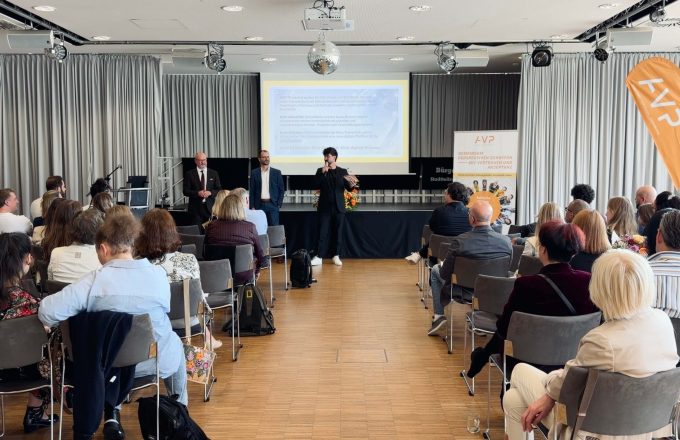
Sicher engagiert at the Democracy Festival

The project “Sicher engagiert – Strengthening Digital Democracy in Politics and Volunteering” took part in the “LAUT UND KLAR” festival organized by the State Agency for Media of North Rhine-Westphalia

IMG_7770

Standing Up Against Online Hate and Harassment

Democracy depends on civic engagement. At the same time, online hate and harassment targeting volunteers and elected representatives continue to increase. Platforms such as Instagram, Facebook, and others play a

93E17BBA-DCBA-4814-88EB-CDAE649E3A24

AwareNet Develops SAMM: A Digital Monitoring Tool for Relevant Online Discussions

AwareNet is currently developing SAMM (Social Automated Media Monitoring), a digital tool designed to help professionals identify, assess, and systematically process relevant public posts and comments on social media platforms

FE6F0DDF-3A06-4B84-84DA-C6EDCEB729AF

Three AI-Powered Risk Dialogue Trainers for Extremist Online Communication

Joachim, Suhaib, and Amir are three AI-powered training tools designed for professionals working in prevention, streetwork, civic education, and educational settings. The applications simulate realistic, emotionally charged online conversations, allowing

Sie möchten helfen?

Geldspenden bitte an:

AVP-Akzeptanz, Vertrauen, Perspektive e.V
Geldinstitut: Stadtsparkasse Düsseldorf
IBAN: DE62 3005 0110 1008 2788 87
BIC: DUSSDEDDXXX
Verwendungszweck: „Spende für die Ukraine“